caiomarcondes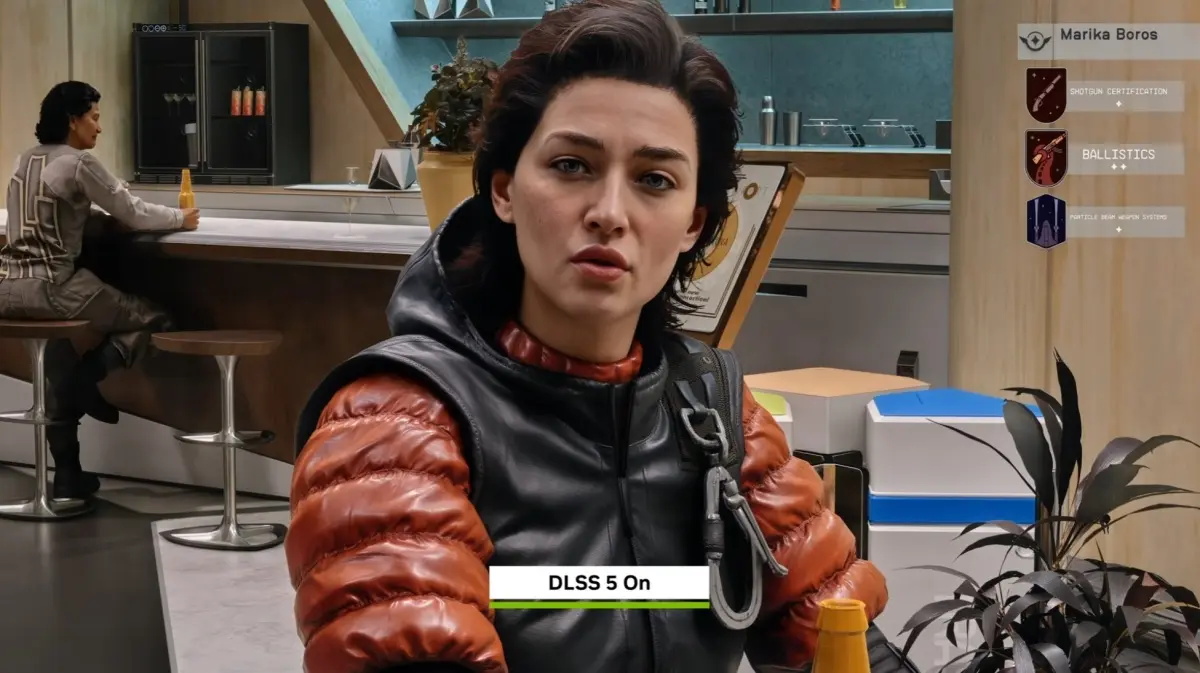
Last Monday (16th), NVIDIA dropped one of those announcements the gaming world had been waiting for: the launch of DLSS 5. According to the company itself, this is the most significant leap in computer graphics since real-time ray tracing arrived back in 2018. The technology is built on a neural network that operates in real time, and the visual results it delivers are, to say the least, stunning.
The most immediately noticeable change for everyday players is the quality of lighting and materials inside games, which now come far closer to photorealism. To drive that point home, NVIDIA released a visual comparison using Resident Evil Requiem running on PC — and the difference is hard to ignore.
Jensen Huang, NVIDIA’s CEO, was straight to the point: “DLSS 5 is the GPT moment for graphics — it blends handcrafted rendering with generative AI to deliver a dramatic leap in realism, while keeping creative control where it belongs: in the hands of the artists.” In his words, what we’re witnessing is yet another reinvention of computer graphics.
DLSS 5 Promises to Transform the Visual Fidelity of Games
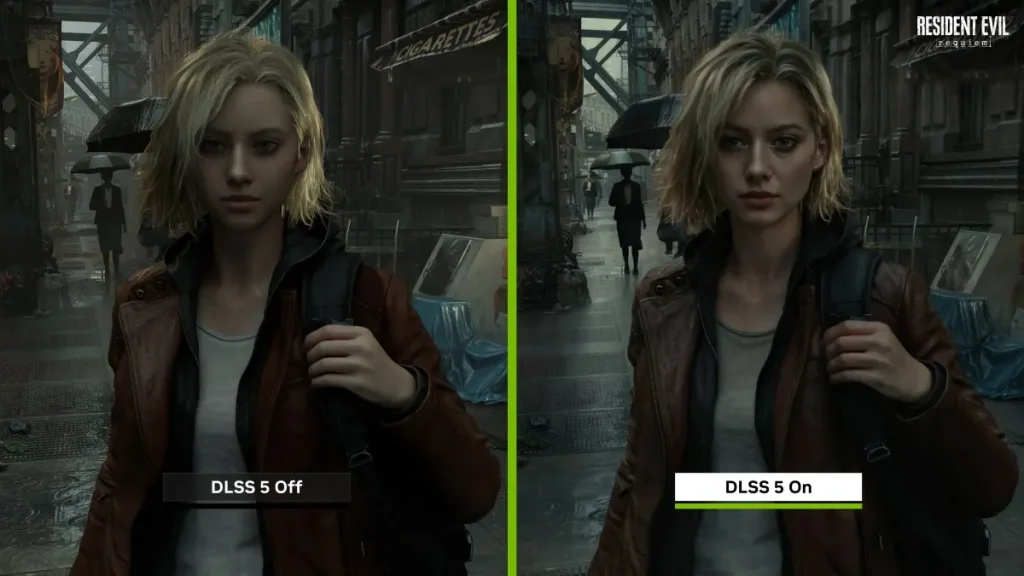
In practice, DLSS 5 works almost like having a generative AI model embedded directly inside a game. It takes the colors and motion vectors from each frame as input, and from there, the model injects high-quality lighting and materials into the scene. All of this builds on the 3D elements already present in the game, with adjustments that ensure visual consistency throughout. NVIDIA promises everything runs in real time, supporting resolutions up to 4K, without sacrificing gameplay smoothness.
For developers, the promise is plenty of flexibility and an integration process that won’t turn into a technical nightmare. The NVIDIA Streamline framework will make it easier to bring DLSS 5 into existing studio pipelines, working alongside technologies they already rely on, like NVIDIA Reflex.
The feature is exclusive to RTX 50 series GPUs and is expected to roll out later this year across titles from partners including Bethesda, Capcom, Tencent, and Ubisoft. Games already confirmed to receive support include Starfield, Assassin’s Creed Shadows, Hogwarts Legacy, The Elder Scrolls IV: Oblivion Remastered, and Resident Evil Requiem.