caiomarcondes
Microsoft’s latest Windows Insider update brings a small but genuinely useful change for monitor enthusiasts. Starting with Release Preview builds 26100.8106 and 26200.8106, Windows 11 now officially supports monitors that report refresh rates above 1000Hz.
The update dropped on March 12th, while the most recent Dev Channel build sits at 26300.7965 from March 6th, followed by version 26300.7966 on March 11th — a servicing validation update with no new features to speak of. The Windows team also notes that monitors using DisplayID now report a more accurate physical size through WMI APIs.
That same update also brings some welcome reliability improvements: HDR behavior is now more stable on monitors with non-compliant DisplayID 2.0 blocks, auto-rotation after sleep works more consistently, and the USB controller can now properly enter a low-power state during suspend when using a native USB 4.0 monitor connection.
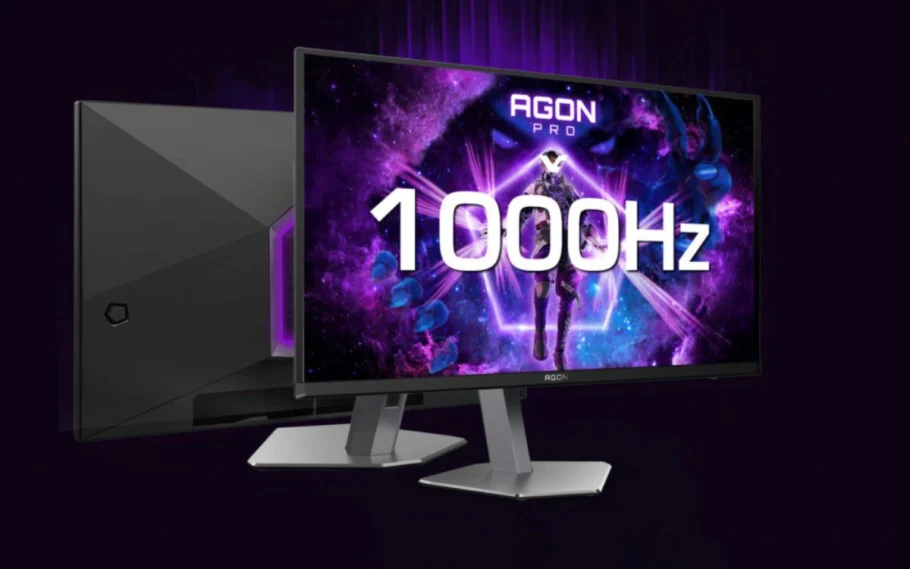
Photo AOC AGON PRO
Right now, 1000Hz monitors are just starting to make the jump from demo floors to actual retail shelves — though mostly in China, rather than seeing a wide rollout in the US or EU just yet.
The clearest examples of compatible displays are the Philips Evnia 27M2N5500XD and the AOC AGON Pro AGP277QK. Both are 27-inch esports-focused monitors with a dual-mode setup: they run at 2560×1440 at 540Hz, then drop down to 1280×720 to hit that 1000Hz mark.
And that’s where the catch comes in — hitting 1000Hz requires dropping to a resolution that most people left behind a long time ago, which makes it a hard sell for anyone outside of the most competitive esports scenarios.
On top of that, according to information shared with Blur Busters, monitors could theoretically push all the way up to 5000Hz. The bottleneck for now isn’t the software — it’s finding hardware that can actually keep up.